Can You Lower Your Risk of Ovarian Cancer? What the Research Says
If ovarian cancer runs in your family, or you've just learned how often it goes undetected until late, one question tends to sit heavy on your heart: Is there anything I can actually do?
That's a fair question, and you deserve an honest answer. The truth lives somewhere in the middle. You can't control everything about ovarian cancer, and no one should promise you a guarantee. But research has shown that some real, measurable things can lower the odds for many women. Knowing what those are, and what they aren't, puts a little more power back in your hands.
Let's talk through what the science actually says about how to reduce ovarian cancer risk, in plain language, without the scare tactics.
First, a little honesty about the odds
Ovarian cancer is not common, but it is serious. About 1 in 91 women will be diagnosed in her lifetime, and about 1 in 143 will die from it, according to the American Cancer Society.
Part of what makes it so hard is that there's no reliable routine screening test for women at average risk, the way there's a Pap test for cervical cancer or a mammogram for breast cancer. The early symptoms can be vague and easy to brush off. That's a big reason most cases are found at a later stage, when they're harder to treat.
This hits some women harder than others. Research shows that Black women are more likely to be diagnosed at a later stage and are more likely to die from ovarian cancer than White women. Much of that gap comes down to differences in access to timely, quality care, not biology alone. That's a justice issue, not just a medical one, and it's part of why awareness and navigation matter so much.
So when we talk about lowering risk, we're talking about shifting the odds in your favor where we can, not erasing them.
What the research links to lower risk
Here's the encouraging part. Several well-studied factors are linked to a lower chance of developing ovarian cancer. Researchers have noticed that many of them share a common thread: things that reduce the number of times a woman ovulates over her lifetime tend to show up as protective.
Birth control pills
This is one of the strongest findings. Women who used oral contraceptives (birth control pills) for 5 or more years have about a 50% lower risk of developing ovarian cancer compared with women who never used them, according to the American Cancer Society. Some research suggests the lower risk can last for years after stopping.
That said, the pill isn't right for everyone, and it carries its own risks and side effects. This is a real conversation to have with your own clinician, not a one-size-fits-all answer.
Pregnancy and breastfeeding
Having given birth is linked to a lower risk. Breastfeeding appears to lower it further, and the longer a woman breastfeeds, the lower her risk. These aren't reasons to make major life decisions, but they're part of the bigger picture researchers see.
Certain gynecologic surgeries
Some procedures are linked to reduced risk, including:
- Tubal ligation ("getting your tubes tied")
- Removal of the fallopian tubes (salpingectomy)
- Hysterectomy (removal of the uterus)
- Using an IUD (intrauterine device)
These are decisions usually made for other reasons. The lower ovarian cancer risk is a documented added benefit that the American Cancer Society notes.
An important word on weight, diet, and lifestyle
You may be wondering where healthy eating and exercise fit in. Here's the honest answer: the evidence linking diet, weight, and physical activity specifically to ovarian cancer risk is much weaker and less clear than it is for some other cancers.
That doesn't mean those habits don't matter. Keeping a healthy weight, moving your body, and eating well support your overall health in many ways. Just be wary of anyone selling a specific "anti-cancer" diet or supplement as a guaranteed shield against ovarian cancer. The research doesn't back that up.
When risk is mostly in your genes
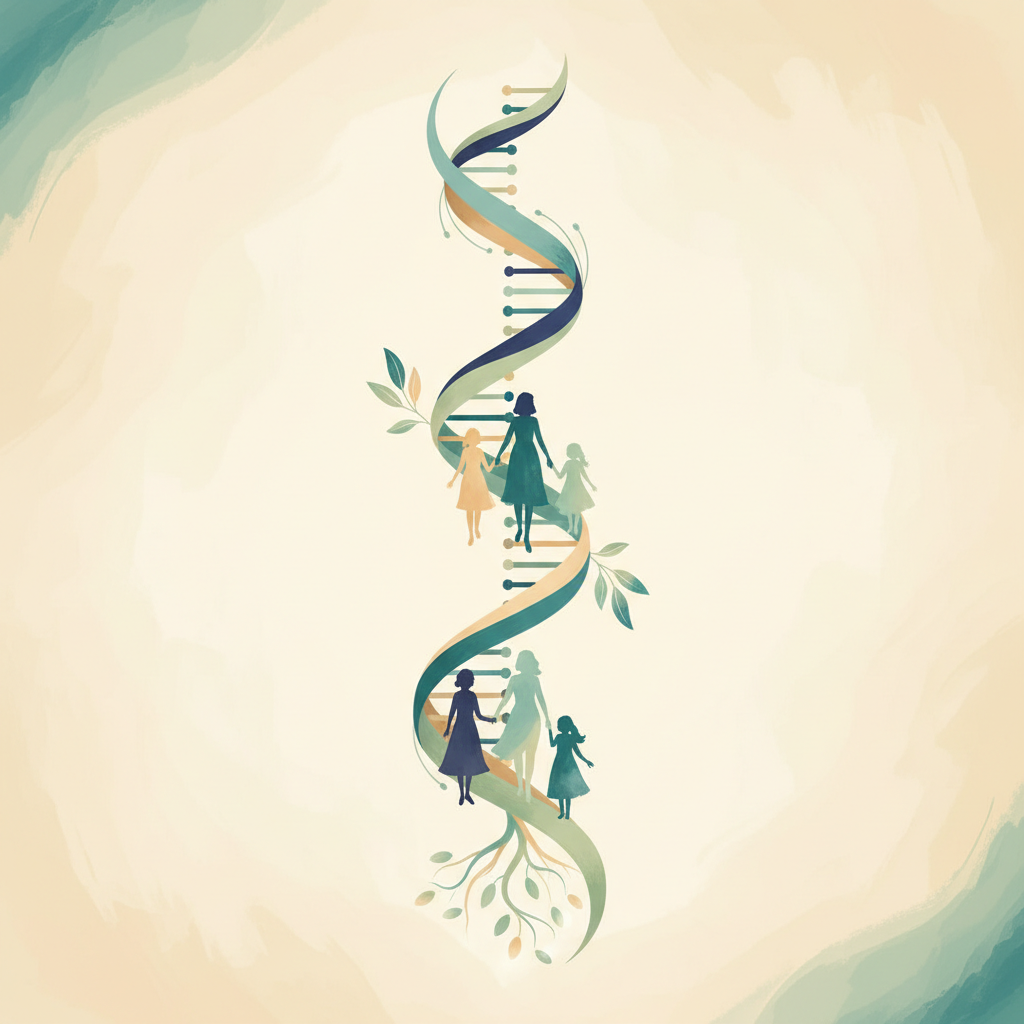
For some women, family history and genetics are the biggest factor, far bigger than any daily habit. Inherited changes in genes like BRCA1 and BRCA2 sharply raise the risk of ovarian and breast cancer. The American Cancer Society estimates the lifetime ovarian cancer risk at roughly 35% to 70% for women with a BRCA1 change, and about 10% to 30% for BRCA2. A condition called Lynch syndrome raises the risk too.
If ovarian, breast, or related cancers run in your family, this is worth taking seriously, but not panicking over. Genetic counseling and testing can help you understand your actual risk with real numbers instead of fear.
For women confirmed to be at high risk, doctors may discuss risk-reducing surgery to remove the fallopian tubes and ovaries. This can sharply lower the chance of developing the cancer, but it's a major, deeply personal decision with real trade-offs, like early menopause. The American Cancer Society notes that removing the fallopian tubes first is being studied as a gentler option for some women before menopause.
None of this should be decided from a blog post. It's exactly the kind of thing a genetic counselor or gynecologic oncologist is there to walk through with you.
Why "knowing your body" still matters most
Because there's no routine screening test, your own awareness is one of your most powerful tools. You are the expert on what's normal for your body.
Pay attention if you notice symptoms that are new, unusual for you, and lasting two weeks or longer:
- Bloating
- Feeling full quickly or having trouble eating
- Pain or pressure in the pelvic area, or abdominal or back pain
- A change in bathroom habits, such as needing to urinate more often or urgently
These symptoms are usually caused by something far less serious. But if they're new for you and they stick around for two weeks or more, don't talk yourself out of getting checked. (And if you have unusual vaginal bleeding, especially after menopause, see a doctor right away.) Speaking up early is not being dramatic. It's being smart.
Key takeaways
- There's no guaranteed way to prevent ovarian cancer, and no reliable routine screening test for average-risk women, so honest awareness matters more than false promises.
- Using combination birth control pills for 5 or more years is linked to about a 50% lower risk; pregnancy, breastfeeding, and certain surgeries (tubal ligation, salpingectomy, hysterectomy, IUDs) are also linked to lower risk.
- Diet and weight have weaker, less clear links to ovarian cancer specifically, even though healthy habits matter for your overall well-being.
- Genetics (like BRCA1 and BRCA2) can be the biggest factor for some women; counseling, testing, and risk-reducing options are worth exploring with a specialist.
- Knowing your body and acting early on persistent symptoms is one of the most powerful steps you can take.
Talk it through with someone who knows your story
The most important step isn't found on any single web page. It's a real conversation with a clinician who knows your health, your family history, and what matters to you. They can help you weigh which of these options, if any, make sense for your life.
At HopeCare Global, this is the heart of our work: helping women, especially those too often left out of the conversation, get clear, plain-language information, connect to early detection and care, and feel supported through it all. You don't have to figure this out alone, and you shouldn't have to.
If this article raised questions for you, let that be a nudge, not a worry. Write your symptoms down. Bring them to your next appointment. Ask about your family history. Those small, brave steps are exactly how you tilt the odds in your favor.
---
This article is for educational purposes only and is not a substitute for professional medical advice, diagnosis, or treatment. Always talk with a qualified healthcare provider about your personal risk and any decisions about prevention, screening, or care.
Sources
- American Cancer Society, About 1 in 91 women will be diagnosed with ovarian cancer in her lifetime, and about 1 in 143 will die from it. Estimated 2026: about 21,010 new diagnoses and 12,450 deaths.
- American Cancer Society, Women who used oral contraceptives for 5 or more years have about a 50% lower risk of developing ovarian cancer; tubal ligation, hysterectomy, and breastfeeding (longer = lower risk) are protective; BRCA1 lifetime ovarian cancer risk ~35-70%, BRCA2 ~10-30%.
- American Cancer Society, Factors that reduce ovarian cancer risk include having children, breastfeeding, IUD use, and oral contraceptives; high-risk women may consider risk-reducing salpingectomy/salpingo-oophorectomy.
- National Cancer Institute, Oral contraceptives, having given birth, breastfeeding, and tubal ligation lower ovarian cancer risk; high-risk women may choose risk-reducing salpingo-oophorectomy.
- Centers for Disease Control and Prevention, There is no reliable way to screen for ovarian cancer in average-risk, asymptomatic women; the CA-125 blood test and transvaginal ultrasound are not recommended as routine screening. Symptoms include bloating, feeling full quickly/trouble eating, pelvic/abdominal/back pain, and urinary changes; see a doctor if symptoms are new and last 2 weeks or longer.
- Centers for Disease Control and Prevention, Ovarian cancer symptom list and the guidance to see a doctor if symptoms are new to you and last 2 weeks or longer; unusual vaginal bleeding warrants immediate evaluation.
- Peer-reviewed (PMC / NIH-indexed), Black women have higher odds of late-stage diagnosis and higher ovarian cancer mortality than White women, driven largely by disparities in access to guideline-adherent and timely care rather than biology alone.