BRCA1 and BRCA2: What Genetic Testing Means for Your Ovarian Cancer Risk
If a relative was diagnosed with breast or ovarian cancer, or someone in your family mentioned a "BRCA mutation," you may be sitting with a quiet worry: Does this mean it's coming for me, too?
That's a fair question, and you deserve a real answer, not a scary one. The truth sits somewhere in the middle. Carrying a BRCA gene change does raise your risk, but it is not a diagnosis, and it is not a sentence. Knowing your status can be one of the most powerful things you do for your health, because it turns the unknown into a plan.
This guide breaks down what BRCA and ovarian cancer have to do with each other, who might benefit from genetic testing, and how to take the next step with a clinician you trust.
What are BRCA1 and BRCA2?
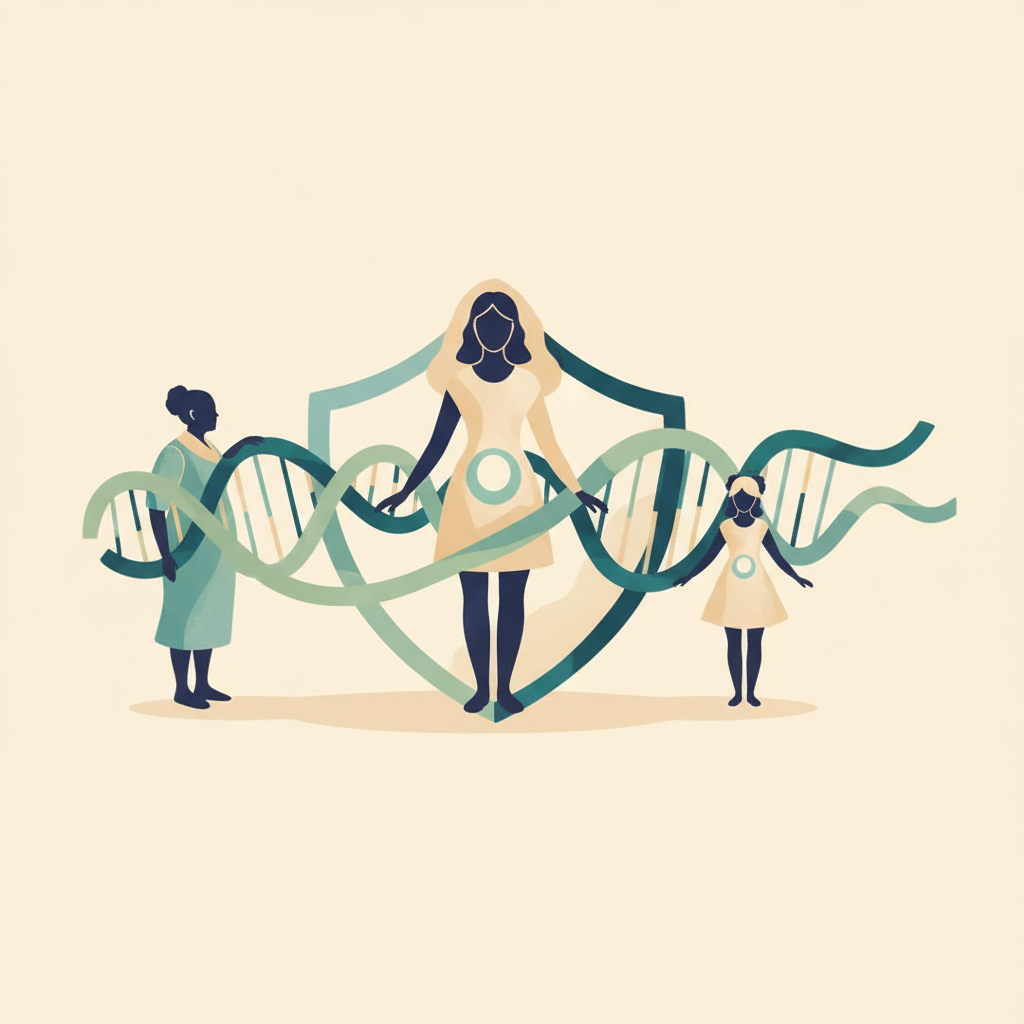
BRCA1 and BRCA2 are genes that everyone has. Their normal job is to help repair damaged DNA and keep cells from growing out of control. Think of them as part of your body's built-in repair crew.
When one of these genes has a harmful change (also called a mutation, a variant, or a "pathogenic variant"), that repair crew doesn't work as well. Over time, that can make certain cancers, especially breast and ovarian cancer, more likely.
A few things to hold onto:
- A BRCA change does not mean you have cancer.
- It means your risk is higher than average, so prevention and early detection matter more.
- Most ovarian cancers are not caused by an inherited BRCA change. The majority happen in people with no known family link.
BRCA and ovarian cancer: what the numbers actually say
Here's some real talk on risk. For women overall, the lifetime chance of developing ovarian cancer is roughly 1 in 91, or a little over 1%. A harmful BRCA change raises that number meaningfully.
According to the National Cancer Institute:
- About 39%–58% of women who inherit a harmful BRCA1 change will develop ovarian cancer in their lifetime.
- About 13%–29% of women who inherit a harmful BRCA2 change will develop ovarian cancer in their lifetime.
So yes, the risk is higher, sometimes a lot higher. But notice what those numbers also say: even with a BRCA1 change, close to half of women will not develop ovarian cancer. Risk is not destiny. The goal of knowing your status is to tilt the odds in your favor through screening, prevention, and early action.
Why early detection matters so much here
Ovarian cancer is hard to catch early. Its symptoms, such as bloating, feeling full quickly, pelvic or belly pain, and needing to urinate often, are vague and easy to brush off. And right now there is no reliable routine screening test for women at average risk, the way a mammogram works for breast cancer or a Pap test works for cervical cancer.
Because of that, most ovarian cancers are found at a later stage, when they are harder to treat. That is exactly why understanding your personal risk, including whether BRCA runs in your family, can be so important. It helps you and your doctor decide whether closer monitoring or preventive steps make sense for you.
How BRCA changes are passed down in families
BRCA changes are inherited, which means they are passed from parent to child. A few important points:
- You can inherit a BRCA change from either your mother's or your father's side. This is a big one. Many people assume an inherited cancer risk only travels through the women in the family. It does not. Dads pass BRCA changes too.
- If a parent carries a BRCA change, each child has a 50% chance of inheriting it.
- A BRCA change can be linked to several cancers in a family, not just ovarian and breast. It can also be connected to male breast cancer, pancreatic cancer, and high-risk prostate cancer.
Some BRCA changes are more common in certain communities. For example, about 2% of people of Ashkenazi Jewish descent carry a harmful BRCA change. Specific "founder" changes also appear more often in people of Norwegian, Dutch, Icelandic, Hispanic, West African, and African American descent, among others. This is one reason family and community history matters, and why no one should assume this conversation "isn't for them."
Who should consider BRCA genetic testing?
Genetic testing is not something every person needs. It is most useful when your personal or family history raises the question. Talk with a doctor or genetic counselor about testing if you have:
- A known BRCA change in the family.
- A close relative diagnosed with ovarian cancer.
- A personal or family history of breast cancer at age 50 or younger.
- A family history of breast, ovarian, pancreatic, male breast, or high-risk prostate cancer.
- Ashkenazi Jewish ancestry, especially combined with any of the above.
You don't have to figure this out alone, and you don't have to qualify perfectly before you ask. A genetic counselor is trained to look at your family tree, explain what testing can and can't tell you, and help you decide if it's right for you.
What genetic counseling involves
Genetic counseling usually comes before testing, and it is there to support you, not pressure you. A counselor will:
- Review your family history and personal health.
- Explain the possible results and what each one would mean.
- Talk through the emotional side, including how a result might affect you and your family.
- Help you understand privacy and what testing involves (often a simple blood or saliva sample).
Whatever you decide, the choice to test is yours.
What happens if a test comes back positive?
First, breathe. A positive result is information, not an emergency. It means you and your care team can build a proactive plan. Depending on your age, health, and family plans, options your doctor may discuss include:
- More frequent monitoring. For some high-risk women, this may combine pelvic exams, transvaginal ultrasound, and a CA-125 blood test. These tools are not proven to catch ovarian cancer early enough to save lives, which is why they are used carefully and not for everyone.
- Risk-reducing surgery, such as removing the ovaries and fallopian tubes (called a risk-reducing salpingo-oophorectomy), which can lower ovarian cancer risk significantly. The timing is personal and is usually discussed alongside your family-building plans.
- Medication and lifestyle conversations tailored to your overall risk.
- Support for relatives, since a positive result may mean that siblings, children, or parents could benefit from testing too.
These are decisions to make with a gynecologic oncologist or genetics specialist, weighing your values, your stage of life, and what matters most to you. There is no single "right" answer, only the right answer for you.
Disparities we can't ignore
It's important to name something honestly: not everyone has had equal access to this information or this care. Black women, for example, are more likely to be diagnosed at a later stage and face higher ovarian cancer mortality than white women, driven in large part by gaps in diagnosis, access, and quality of care. Research shows that when Black and white patients receive the same guideline-based treatment, those survival gaps largely disappear, which tells us the problem is access, not biology.
Genetic testing and counseling have too often reached some communities and not others. Closing that gap, so that every woman knows her options, is part of why awareness and access work matters so deeply.
Key takeaways
- BRCA1 and BRCA2 are genes everyone has; harmful changes in them raise the risk of ovarian and breast cancer, but do not guarantee cancer.
- BRCA-linked lifetime ovarian cancer risk is meaningfully higher than the roughly 1-in-91 general risk, yet many carriers never develop the disease.
- BRCA changes can be inherited from your mother's or father's side, and each child of a carrier has a 50% chance of inheriting it.
- There is no reliable routine screening test for ovarian cancer, which is why knowing your personal risk matters.
- Genetic counseling and testing are most helpful when family or personal history raises a red flag, and the decision to test is always yours.
- A positive result is a starting point for a proactive plan, not a diagnosis.
Talk with someone who knows your story
If anything here struck a nerve, that's your cue to start a conversation, not to panic. Bring your family history to your doctor, ask whether a referral to a genetic counselor makes sense, and let yourself ask the questions you've been carrying.
At HopeCare Global, our mission is to make this knowledge reachable for every woman, especially those who have been left out of the conversation. Through symptom education, support navigating care and cost, and community-grounded outreach, we want you to feel informed and supported, never alone. Early understanding saves lives, and you deserve access to it.
You don't have to have all the answers today. You just have to take the next small step.
Medical disclaimer
This article is for educational purposes only and is not a substitute for professional medical advice, diagnosis, or treatment. It does not provide individualized medical guidance. Always talk with a qualified healthcare provider or genetic counselor about your personal risk, testing options, and any decisions about your care.
Sources
- National Cancer Institute (NCI), About 39%–58% of women who inherit a harmful BRCA1 change and 13%–29% of those with a harmful BRCA2 change will develop ovarian cancer in their lifetime; about 1.1% of women in the general population develop ovarian cancer; about 2% of people of Ashkenazi Jewish descent carry a harmful BRCA change; founder mutations also occur in Norwegian, Dutch, Icelandic, Hispanic, West African, and African American populations; no effective ovarian cancer screening method is known; risk-reducing salpingo-oophorectomy can lower ovarian cancer risk.
- American Cancer Society, A woman's lifetime risk of getting ovarian cancer is about 1 in 91; lifetime risk of dying from ovarian cancer is about 1 in 143.
- American Cancer Society, BRCA1/BRCA2 mutations substantially raise ovarian cancer risk; mutations are about 10 times more common in Ashkenazi Jewish individuals; general-population lifetime ovarian cancer risk is low (under 2%).
- American College of Obstetricians and Gynecologists (ACOG) / GeneReviews (NCBI), BRCA mutations are inherited in an autosomal dominant pattern: each child of a carrier has a 50% chance of inheriting the mutation, regardless of sex, and it can be inherited from either parent; explanation of genetic counseling, testing, and risk-reducing options.
- American Cancer Society / U.S. Preventive Services Task Force, There is no screening test proven effective for ovarian cancer in average-risk women, and most ovarian cancers (about 70–80%) are diagnosed at an advanced stage; common symptoms include bloating, pelvic/abdominal pain, feeling full quickly, and urinary urgency.
- Peer-reviewed systematic review and meta-analysis (PMC/PubMed), Black women experience higher ovarian cancer mortality (roughly 18% increased risk) and lower receipt of guideline-adherent treatment than white women; when treatment is equivalent, racial survival differences largely disappear, indicating disparities are driven by access and quality of care rather than biology.